



Choosing a preschool curriculum? Here's what to look for, how it impacts learning, and how tools like Little Lab support your teachers every day.
Choosing a preschool curriculum is one of the most important decisions a school can make. It shapes what children learn, how they grow, and how confident teachers feel when they walk into the classroom each day.
The right curriculum does more than outline what should be taught. It guides how teachers teach, how children engage, and how learning unfolds across different age groups. A strong curriculum provides structure without limiting creativity. It supports both long-term development goals and the daily realities of the classroom.
But what exactly makes a curriculum effective, not just in theory but in practice?
It supports how children learn at every stage
In early childhood, learning doesn’t follow a straight line. One week, a child is exploring sounds and textures. Next, they’re piecing together sentences or showing signs of leadership in group play.
That’s why a strong curriculum isn’t just broken down by age. It’s built around how children actually develop, offering a clear path for progress that leaves room for curiosity, play, and natural growth.
That might look like:
- Offers clearly defined learning outcomes for each developmental stage
- Uses open-ended, play-based activities that adapt to different skill levels
- Builds in repetition and progression to deepen understanding over time
- Includes themes or modules that support emerging interests and real-life application
Children build new skills best through repeated, age-appropriate experiences. Projects like running a mini market, leading group games, or preparing simple meals give them practical ways to explore creativity, collaboration and independence at the right stage of development.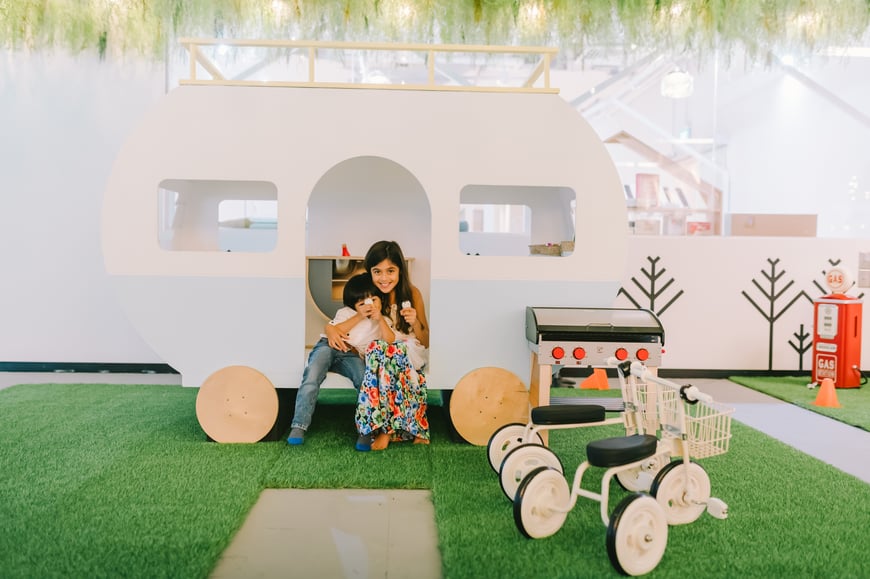
It focuses on the whole child, not just academics
Children aren’t just students. They’re thinkers, movers, feelers, and friends. A strong curriculum helps them build skills across all areas of development.
That includes:
Learning how to express feelings and cooperate with others
Practicing physical coordination through movement
Asking questions and building confidence in their own voice
Preschool is where lifelong learning habits start. That includes how children relate to themselves, their peers, and the world around them.
It works in classrooms with teachers in mind
Even the best curriculum won’t make an impact if it’s hard to implement. Teachers need support in the form of clear structure, reliable materials, and practical tools they can use throughout the day.
You’ll want a program that includes:
Easy planning tools with pre-structured or customizable lesson plans
Clear developmental outcomes for each activity
A flexible approach that allows teachers to adjust based on class dynamics
Teacher training tools that are ongoing, accessible, and relevant
Teachers thrive when their curriculum works with them, not against them.
It aligns with your school’s values and goals
Every organization has its own philosophy. Some focus on academic readiness. Others care more about creativity, confidence, or character. The right curriculum supports the outcomes your school believes in.
That could mean:
More room for play and exploration
Stronger links between school and home
A consistent approach across age groups and classrooms
When your curriculum matches your school’s goals, everything works better. Teachers feel more confident. Parents are more engaged. And children grow in a setting that feels thoughtful and intentional.
How Little Lab brings this to life
One platform that supports both teaching and learning in practical, thoughtful ways is Little Lab. It brings the Trehaus Method into classrooms through a digital system that’s designed to work with real teachers, real children, and real schedules.
Inside, schools and teachers gain access to:
Developmentally appropriate lesson plans that are ready to use
Comprehensive scheduling and planning support
Child progress tracking tools that simplify documentation
A structured progression of content from toddlers to early primary years
The Trehaus Method itself is built around a project-based approach, covering ten themed modules with over 100 curated lesson recommendations and projects. Lessons are mapped to clear developmental goals that span social-emotional growth, academic foundations, and character development.
This curriculum reflects a modern pedagogy focused on building confidence, communication, and future-ready skills. Combined with the digital support of Little Lab, it becomes a tool that doesn’t just inform teaching, but actively improves how schools run each day.
Choosing a curriculum that works for your school
A great curriculum supports everyone in the classroom. It helps teachers feel organized and empowered. It helps children build real, lasting skills. And it helps school leaders feel confident that their team has what they need to deliver high-quality early education.
Whether you're refining your current program or starting fresh, make sure your curriculum is built to support the people who bring it to life—your teachers. When that foundation is strong, everything else gets better.
To see how Little Lab works in real classrooms, get in touch to book a free demo.

Executive Summary
Celebrate the impact of your teaching
Effortless progress tracking, without the paper work
Measure undeniable growth in every child
Flexible for any point in the learning journey
Perfect for small groups or big classes